The short answer
Yes, in our view. The 420-hour course is a solid foundation for a caregiver (CG), but it is not a full safety kit. We believe everyone who works directly with residents should also hold a current Basic Life Support (BLS) certificate and basic first aid training, and repeat them regularly. We found no source that makes this a legal rule for Thai nursing homes, and one study found that the regulation does not define specific qualifications for elderly caregivers (Rangsit University). So for now it is good practice, not a requirement.
What the 420-hour course is
The 420-hour elderly caregiver course is accredited by the Department of Health Service Support (DHSS) (Journal of DHSS). A 2026 provincial course in Phitsanulok split it into 200 hours of theory and 220 hours of practice (Daily News). One private school lists topics such as general knowledge about older adults, law, health promotion, vital signs, care for dependent patients, palliative care and assessing critical situations, and charges 25,000 baht (Thairath). The Department of Older Persons Affairs ran a free 420-hour course in 2022 (Thansettakij).
What BLS and first aid add
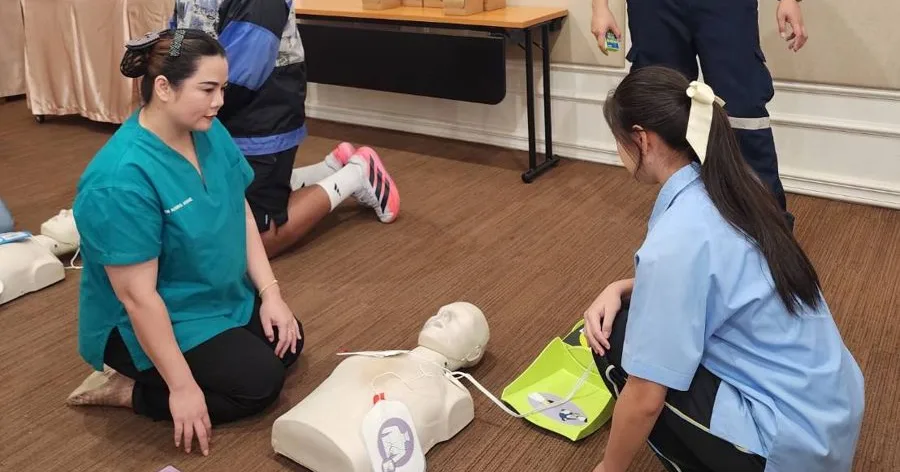
- BLS: CPR for adults, children and infants, helping a choking person, and using an automated external defibrillator (AED). One US-based provider describes a 4-hour class with a written exam and a hands-on skills test, giving a 2-year certificate (InPulse CPR). Hours and validity differ by provider.
- Basic first aid: the first response to everyday emergencies until a nurse, doctor or ambulance arrives. The Thai Red Cross ran a blended basic first aid course for the public in 2024, with online study and a one-day onsite session (Amarin TV).
Why it matters in a nursing home
A US study of 71,530 cardiac arrests in nursing homes between 2013 and 2021 found that staff gave CPR before the ambulance arrived in 82.2% of cases, and used an AED in only 28.4%. The odds varied several-fold between homes, and the authors called the rates less than ideal (Resuscitation Plus, via DOAJ). The study does not prove that training is the cause, but it shows that a resident’s chance of a fast response depends on the home.
Thai homes care for many frail residents, with around 170,000 older people bedridden and more than 800,000 living with dementia nationwide (IBTimes). In our view, those residents are the ones who most need staff who can respond calmly in the first minutes.
Who should learn what: our suggested minimum
- CG: BLS, basic first aid, safe lifting and transfers, and how to report changes to the nurse.
- NA: the same, plus recognising when a resident is getting worse and calling the nurse quickly.
- PN: BLS as a minimum, with regular refreshers and knowledge of the home’s emergency plan.
- RN: BLS as a minimum. A home with very ill residents may reasonably ask for more.
- Everyone: a yearly emergency drill, and knowing where the AED is kept.
Extra courses do not widen anyone’s legal role. A first aid certificate does not make a CG a nurse.
Other courses worth considering
- Dementia care: communication, wandering and distress.
- Safe handling and transfers: protects residents and staff from falls and injuries.
- Choking, swallowing and safe feeding.
- Infection control and fall prevention.
- Dignity and no-restraint care: after a Kanchanaburi home was ordered closed in October 2026 for enclosing beds in metal cages (Khaosod English), we think this training matters.
Our opinion
This section is the view of Nursing Homes Thailand, not established fact.
- The 420-hour course is necessary but not enough. Emergency skills fade without practice, so a certificate from years ago is not reassurance.
- Training should not depend on the caregiver’s own pocket. The employer benefits and should pay.
- One certified person on the night shift is not enough. What matters is how many certified staff are on each shift.
- Training supports staffing, it does not replace it.
Our suggestions
- Families: ask how many staff on each shift hold a current BLS and first aid certificate, and ask to see the expiry dates. Ask where the AED is kept, how often staff practise, and who calls the doctor or ambulance.
- Operators: make BLS and first aid part of hiring and probation, pay for refreshers, run drills, and display a training chart.
- Course providers and policymakers: consider adding BLS and first aid to the 420-hour syllabus or its accreditation review, and publish a minimum training list for homes.
- Caregivers: keep copies of your certificates and ask your employer to cover renewals.
Interested? Contact us
Not sure how to check a home’s staff training? Contact us through Nursing Homes Thailand and we will be glad to help.
Sources
- Rangsit University: Standards for elderly caregivers in Thailand
- Journal of the Department of Health Service Support: Caregiver course accreditation
- Daily News: 420-hour caregiver course in Phitsanulok
- Thairath: 420-hour elderly caregiver course
- Thansettakij: Free 420-hour caregiver course
- InPulse CPR: Basic Life Support certification
- Amarin TV: Thai Red Cross basic first aid course
- Resuscitation Plus (via DOAJ): Cardiac arrest in US nursing homes
- Khaosod English: Care centre with caged beds ordered shut
- IBTimes: Thailand orders 1,203 care facilities inspected