

Why visas matter for a care home stay
Foreign residents in Thai care homes, together with the family who visit and the staff who care for them, all fall under Thai immigration rules. The right visa decides how long a resident can stay, whether a spouse can join them, and whether a caregiver can legally work. The rules also change often, so this guide summarises the main routes as of October 2026.
What changed in September 2026
Visa-exempt entry is now 30 days, for tourism only, for the 60 listed countries and territories. It replaced the 60-day scheme for entries from 15 September 2026, and travellers admitted earlier keep their 60-day stamp. The date stamped in the passport is what counts. (ThaiLawOnline)
For a long stay in a care home, a 30-day stamp is only a starting point. Plan the move to a long-stay status such as a Non-O before you travel, rather than after you arrive.
All non-Thai travellers must also complete the Thailand Digital Arrival Card (TDAC) online within three days before arrival. It replaced the paper TM6 card in May 2025. (ThaiLawOnline)
Retirement visa: three routes
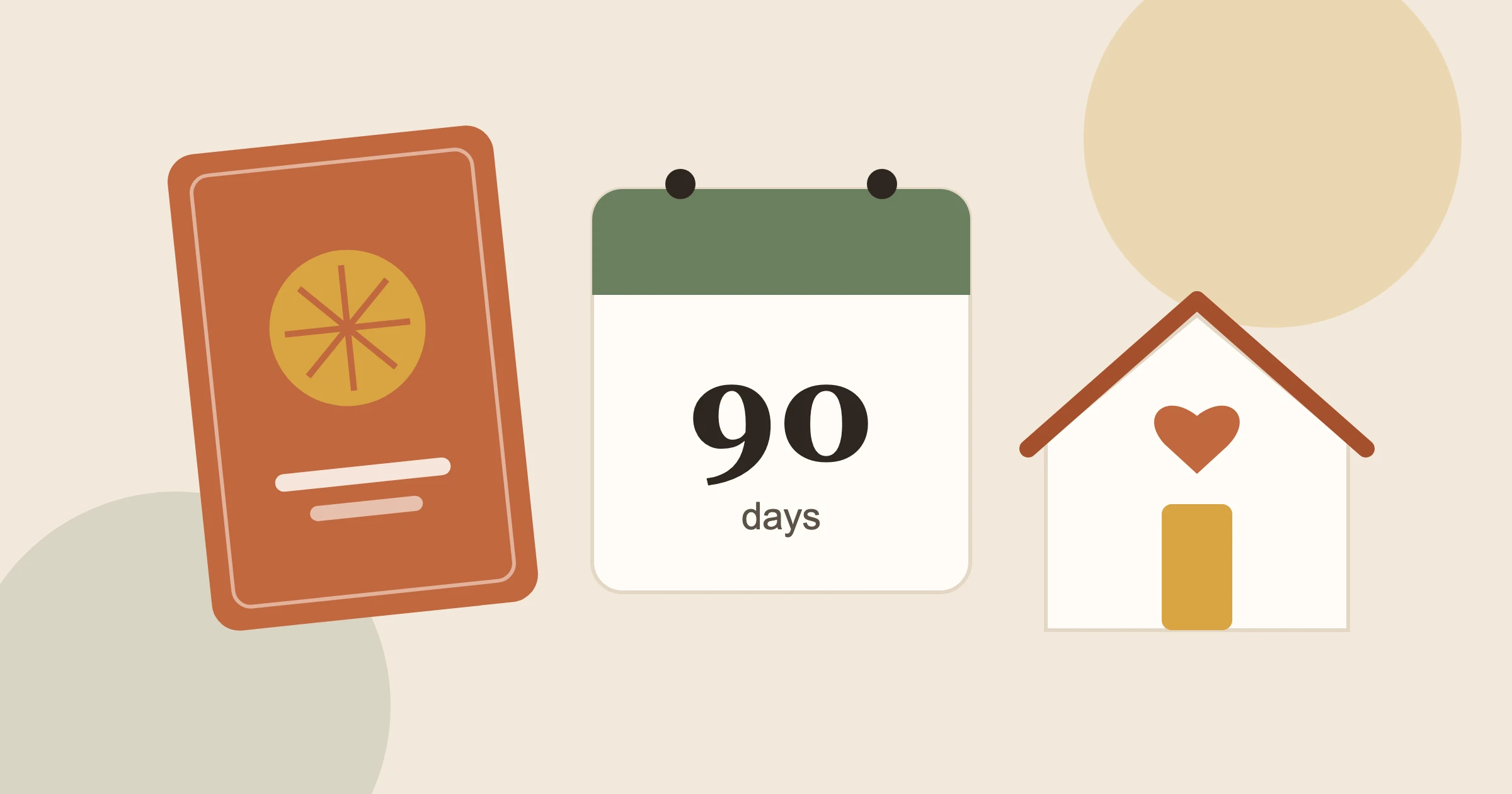
Thai law has no visa literally called “retirement”. In practice it means one of three routes for people aged 50 or over, and none of them allows work. (ThaiLawOnline)
- Non-O, then a one-year extension. The most common route. Enter on a 90-day Non-O (issued by an embassy or through the e-Visa portal), or change status from a visa-exempt or tourist entry at an immigration office, then apply for a one-year extension of stay based on retirement.
- Non-O-A. A one-year multiple-entry visa issued by a Thai embassy in your home country. It adds a police clearance, a medical certificate and health insurance of at least 3,000,000 baht or 100,000 US dollars.
- Non-O-X. Five years, renewable once for ten in total, for nationals of 14 listed countries. It needs 3,000,000 baht on deposit (never below 1,500,000 baht afterwards) and health cover of 40,000 baht outpatient and 400,000 baht inpatient.
Non-O retirement extension: what immigration looks for
Based on the most recent sources we checked (ThaiLawOnline):
- Age: 50 or over.
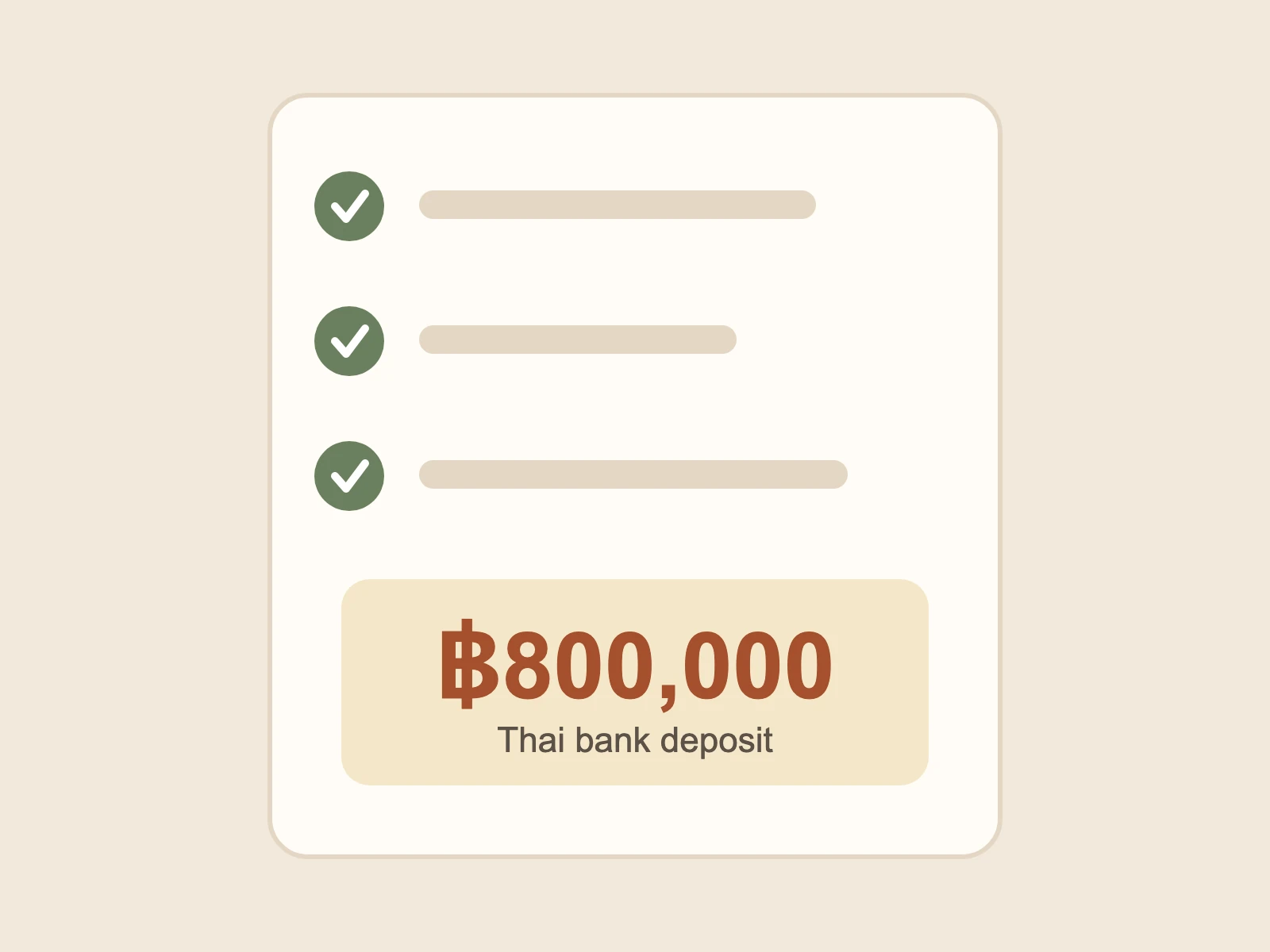
- Money: 800,000 baht in a Thai bank for at least two months before filing and for three months after approval (it may then fall to 400,000 baht for the rest of the year), or income of at least 65,000 baht a month, or a combination reaching 800,000 baht a year.
- Insurance: no health-insurance condition on the Non-O extension itself. For care home residents we still recommend cover, and the O-A and O-X require it.
- Application: form TM7 with a fee of 1,900 baht, filed up to 30 days before the current stay expires (45 days at Chaeng Watthana in Bangkok).
- Documents: passport and copies, a fresh bank letter, passbook and 12-month statement, TM30 receipt, proof of address, a 4 x 6 cm photo and a hand-drawn map to the residence.
- Work: not permitted on a retirement extension.
Some older guides still quote a 2,000 baht fee or an insurance requirement for the Non-O extension. Always confirm the current figures at your local immigration office.
A common mistake is relying on a pension that sits right at the 65,000 baht line: a stronger baht can push it below the threshold on the day you apply.
After approval: keeping your status valid
- 90-day report. Anyone staying more than 90 days must report their address to immigration every 90 days. Late reporting can mean going in person and paying a fine.
- Re-entry permit. Buy one before any trip abroad (1,000 baht single, 3,800 baht multiple), or the extension is cancelled when you leave. (ThaiLawOnline)
- TM30. The place of stay must report a foreign resident’s address, and the receipt is part of the extension file. Ask the care home whether it files this and can provide proof-of-address documents.
- Yearly renewal. The extension is renewed each year inside Thailand with the same financial proof.
Spouses, family and visitors
A spouse or children travelling with the main applicant usually need their own Non-O as dependants. The Royal Thai Embassy publishes a dependant Non-O for family of Non-B, ED and O-A applicants and for foreign family of a Thai citizen (Royal Thai Embassy). For the spouse of a retiree on a standard Non-O, practice can vary, so confirm with the embassy or immigration office before you travel.
If one partner is married to a Thai citizen, the Non-O marriage extension needs 400,000 baht in a Thai bank or income of 40,000 baht a month. (ThaiLawOnline)
Relatives who only visit usually enter visa-exempt (30 days under the new rules) or on a tourist visa, and do not need a long-stay visa.
Care home staff: Non-B and work permits
A retirement extension never allows work, and a work permit cannot be issued against it. Anyone who wants to work, such as a foreign nurse, caregiver or manager, needs a Non-B visa and a work permit. (ThaiLawOnline)
A Non-B is typically issued as a 90-day single entry, or as a one-year multiple entry with up to 90 days per stay. The work permit and a work-based extension follow, and the employer must be a properly registered business.
Other options for larger budgets
The Long-Term Resident (LTR) visa, including the Wealthy Pensioner category, runs for 10 years with a 50,000 baht government fee (ThaiLawOnline). Holders are exempt from 90-day reporting (ThaiLawOnline).
Checklist before you book a stay
- Confirm your age and which visa route fits your situation
- Check your entry stamp (30 days from 15 September 2026) and complete the TDAC
- Open a Thai bank account and plan the 800,000 baht at least two months ahead
- Check passport validity (extensions commonly require at least 18 months)
- Ask the care home about TM30 reporting and a residence letter
- Plan the 90-day report and a re-entry permit for any trip abroad
Interested? Contact us
Not sure which visa suits you or your parent? If you are interested, contact us through Nursing Homes Thailand and we will be glad to help.