
The short answer
Older adults need fewer calories than before, but just as much or more of the good things: protein, vegetables, fruit, calcium and fluids. In practice, that means a balanced plate from all five food groups, soft textures that are easy to chew, mild flavours with less salt and sugar, small frequent meals if appetite is poor, and plenty to drink. Every person is different, so a doctor or dietitian should adjust the plan for conditions such as diabetes, kidney disease or swallowing problems.
Why food matters more with age
Thailand’s Department of Health has reported that only 24.2% of people aged 60–69 eat enough vegetables and fruit, falling to 17.7% at 70–79 and 11.4% at 80 and over. Many also eat less meat, vegetables, fruit and milk than they need, so they miss out on calcium, iron and several vitamins, which raises the risk of malnutrition and anaemia (Sanook).
Ageing also brings practical problems: missing teeth make chewing hard, swallowing problems can cause choking, and dementia can affect eating (Bangkok Biz News).
What to eat each day
A Deputy Director-General of the Department of Health suggested these daily amounts for older adults in 2023 (Naewna):
- Rice and starch: 7–9 ladles (ทัพพี)
- Vegetables: 4 ladles
- Fruit: 1–3 portions
- Meat, fish or eggs: 6–8 tablespoons
- Milk: 1–2 glasses
The Department of Health also advises (Sanook):
- Eat from all five food groups, in variety.
- Choose unpolished rice most of the time, switching to noodles or other starches at some meals.
- Pick lean protein: fish, eggs, lean meat and dried beans.
- Eat vegetables of many colours, and fruit that is not too sweet.
- Drink plain milk and eat calcium-rich foods such as small fish and firm tofu.
These amounts are a general guide. People who are very small, very active, underweight or ill may need different portions.
Protein: the nutrient most often short
Older people need protein to keep their muscles, heal wounds and stay strong. The European geriatric nutrition guideline (ESPEN) recommends at least 1.0 g of protein per kg of body weight a day, adjusted to each person. Older people with acute or chronic illness may need 1.2–1.5 g/kg (Springer, Nutritional Requirements in Geriatrics). For a 60 kg resident, that is roughly 60 g a day or more.
In our view, the easiest way to reach this is to add protein to every meal: an egg in rice porridge, soft tofu in soup, steamed fish, or a glass of milk or soy milk as a snack. People with kidney disease may need less protein, so check with their doctor first. Protein matters even more after surgery or illness; see our guide to recovery and rehabilitation care in Thailand.
How to eat: texture, timing and company
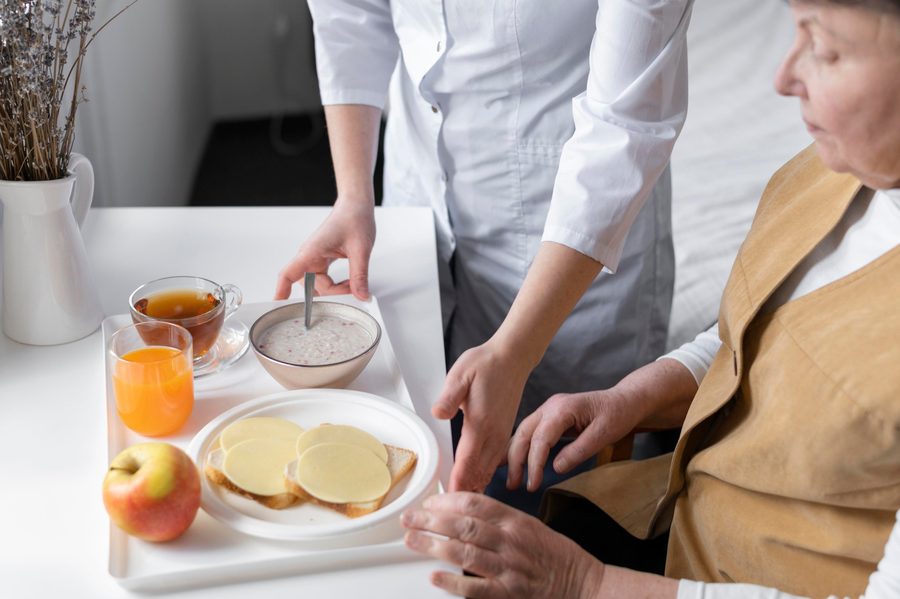
- Make food soft: cut into small pieces and boil, steam or blanch so it is easy to chew and digest (Sanook).
- Small, frequent meals: if the person eats little at main meals, offer small amounts 5–6 times a day (Sanook).
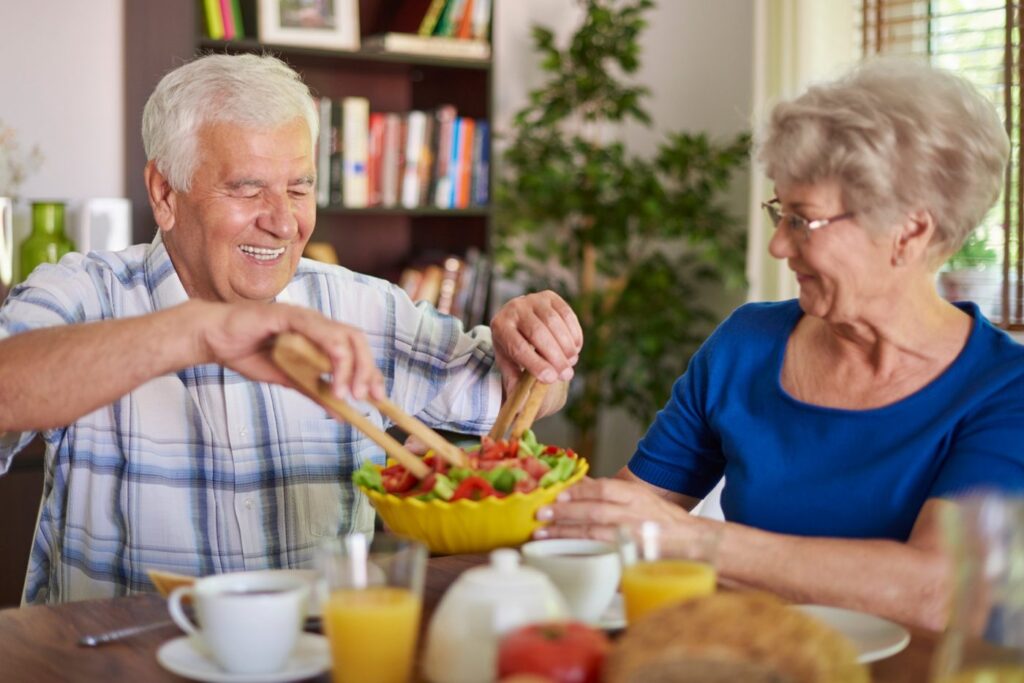
- Eat together: the Department of Health encourages older people to share meals with family for emotional warmth (Naewna).
- Swallowing problems need a proper assessment. The international IDDSI framework sorts texture-modified foods and thickened drinks into 8 levels, from 0 to 7 (East Lancashire Hospitals NHS Trust). A speech therapist or doctor should decide which level a person needs.
- Our safety tips: sit the person upright, offer small bites, go slowly, and do not rush or feed someone who is drowsy. Staff who help at mealtimes should know what to do if someone chokes; read why caregivers need training beyond the 420-hour course.
Less salt, sugar and fat
WHO recommends that adults eat less than 5 g of salt a day, just under one teaspoon (WHO). Thais eat about 3,636 mg of sodium a day, roughly 9.1 g of salt, close to twice that level (Bangkok Biz News).
The Department of Health advises older people to cut back on sweet, fatty and salty tastes, flavour food with herbs, eat fewer pickled and processed foods, choose boiling, steaming or baking over frying, and go easy on stir-fries and coconut-milk curries (Sanook).
Drinks
- ESPEN recommends offering older women at least 1.6 litres and older men at least 2.0 litres of drinks a day, unless a medical condition calls for something different (Springer, Hydration in Geriatrics).
- Thirst often weakens with age, so all older adults should be treated as at risk of dehydration and encouraged to drink (Springer, Hydration in Geriatrics).
- The Department of Health suggests 8 glasses of clean water a day, avoiding tea and coffee in the evening, and no alcohol or energy drinks (Sanook).
- People with heart or kidney failure may have a fluid limit. Follow the doctor’s advice.
Warning signs to report
These are our suggestions for when to tell the nurse or doctor:
- Weight loss, or clothes becoming loose.
- Eating less than half of meals for several days.
- Coughing, choking or a wet voice during or after meals.
- Pain in the mouth, loose dentures, or refusing food.
- Drinking very little, or new confusion.
Our opinion
This section is the view of Nursing Homes Thailand, not established fact.
- Good food is part of care, not hospitality. A tasty, well-planned menu prevents problems that medicine later has to fix.
- Too much rice porridge and too little protein is a common pattern. Soft does not have to mean plain.
- Mealtimes should be social and unhurried. Help with eating takes time, and homes should staff for it. Learn who does what among NA, CG, PN and RN staff.
- Food the person enjoys gets eaten. Familiar Thai dishes, made softer and less salty, usually work better than unfamiliar “healthy” food.
Our suggestions
- Families: tell the home about your relative’s favourite foods, dislikes, teeth or dentures, and any swallowing problems. Ask to see a week’s menu, and visit at mealtime.
- Operators: weigh residents monthly, record how much they eat, offer drinks between meals, plan protein at every meal, and involve a dietitian and speech therapist when needed.
- Caregivers: sit at eye level when helping, describe the food, offer choices, and note any coughing or leftover food.
- When visiting a home: ask how they adapt texture for residents with swallowing problems, and how often they check weight. For more questions to ask, see what families should know before choosing a care facility.
Interested? Contact us
Not sure whether a home can meet your loved one’s food needs? Contact us through Nursing Homes Thailand and we will be glad to help.
Related reading
- Nursing homes in Thailand: a family’s guide to elder-care centres
- Recovery and Post-Surgery Rehabilitation Centres in Thailand
- NA, CG, PN and RN in a Nursing Home: What Is the Difference?
- Should Caregivers and Nurses Be Trained Beyond the 420-Hour Course? BLS, First Aid and More
- Nursing Home or a Caregiver at Home? How to Know When It Is Time
- When Trust Is Shaken: What Families Should Know Before Choosing an Elderly Care Facility
Sources
- Sanook: Department of Health’s 12 tips on food for older people
- Naewna: Department of Health advice on daily food amounts for older people
- Bangkok Biz News: Four health problems in older people and food choices
- Springer: Nutritional requirements in geriatrics (ESPEN)
- Springer: Hydration in geriatrics
- WHO: Salt reduction fact sheet
- Bangkok Biz News: How much sodium Thais eat
- East Lancashire Hospitals NHS Trust: IDDSI framework